For thousands of years, people have wondered about magic. Is it a real force? Can one person influence another so as to obstruct their life or change its course?
The Quran does not deny the existence of magic; it mentions it explicitly: “They cannot harm anyone through it except by God's permission.” But the verse establishes something essential: magic is not an absolute force, nor something capable of breaking God's laws or completely controlling a human being. If it were, the Quran would not have qualified its influence in this way.
Another, more important question emerges: if someone is trying to influence you, is there something within you that allows that influence to settle?
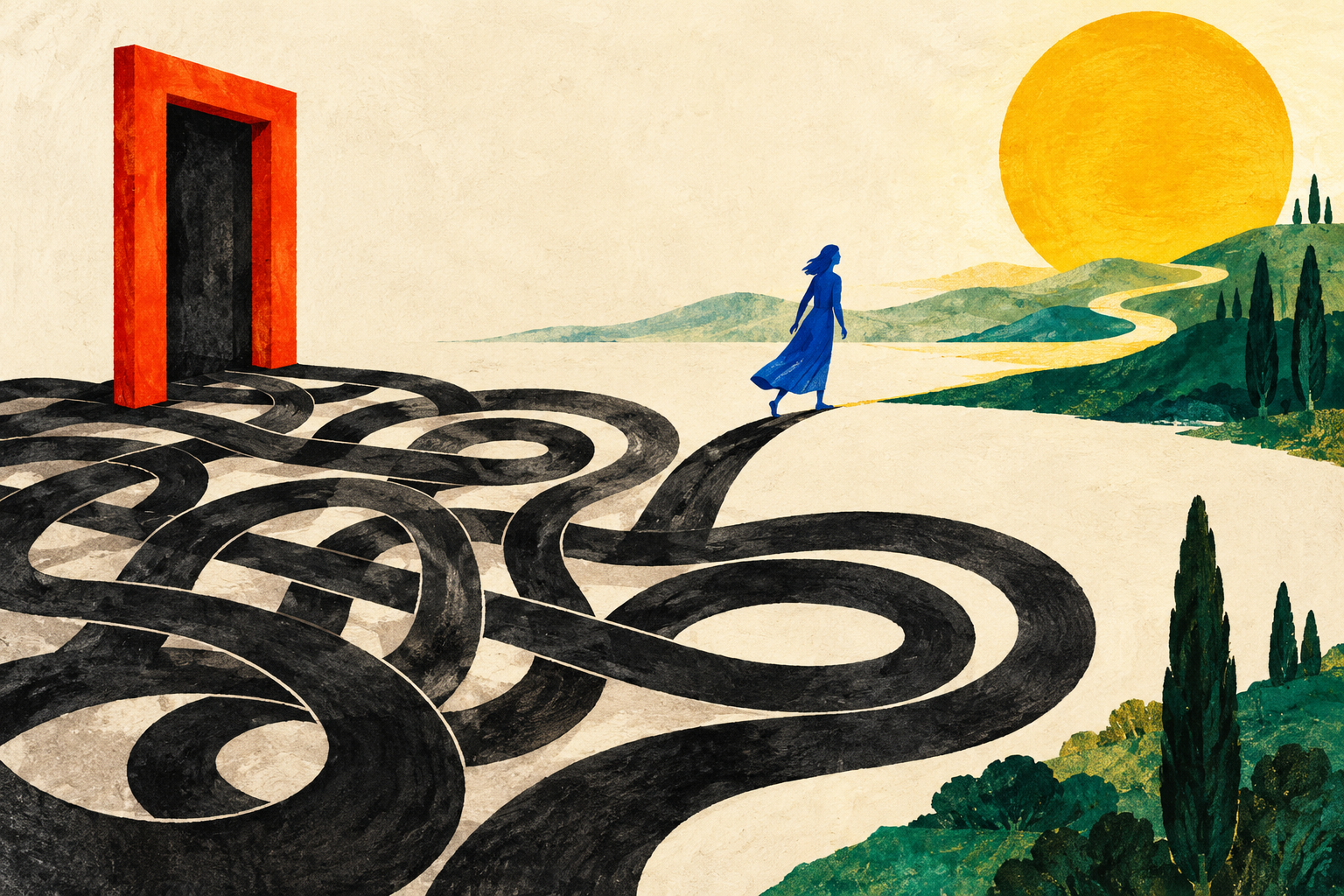
A seed does not grow on rock. It needs ground that receives it. Perhaps the same is true of every form of negative influence to which people are exposed. Someone who lives in constant fear, repeats the same thoughts, follows the same paths, and responds to problems in the same way despite failing dozens of times becomes like a person circling within a closed loop. Days and circumstances change, but they keep reproducing the same scenario: the same fears, reactions, expectations, and results. Life seems to move while they remain still.
Interestingly, when the Quran speaks of Pharaoh's magicians, it says: “They bewitched the people's eyes and struck them with fear.” It does not say they changed reality itself, but that they influenced how people saw reality. It is as though fear is one of magic's keys. Fear makes things look larger than they are. It makes risks more visible than opportunities, incapacity more visible than ability, and the ending visible before an attempt has even begun.
A person held captive by fear therefore becomes easy to lead for any force seeking to push them into more fear. A person who continually examines their thoughts, breaks old patterns, and renews their view of life becomes harder to influence. Rigidity is not merely a bad habit. It is a form of captivity.
The Quran draws attention to this meaning when it says: “Rather, they said: We found our forefathers following a way, and we are guided by their footsteps.” The problem was not a lack of information. It was attachment to one pattern of thought, and the belief that what a person had grown used to was the only possible truth.
Here may lie one of the most dangerous kinds of magic: losing the ability to see alternatives. Becoming captive to one idea, one fear, one wound, or one old story repeated to oneself every day. A person believes their experience is an unchangeable destiny, while in reality they are unknowingly reproducing it.
If we reflect on human lives, we find people for whom the same scene recurs in different forms. They enter the same relationships, make the same mistakes, respond to problems in the same ways, then wonder why the results repeat. It is as though a force always returns them to the same point. Part of this force may lie outside the person. Another part may exist within, in unexamined thoughts, unchallenged fears, or old patterns they have not dared to break.
Liberation therefore begins when a person regains movement: learning something new, trying a new response, stepping outside the circle of old expectations, and ceasing to define themselves through past wounds and fears. What is stagnant is easy to influence. What is alive is always moving and renewing itself.
Perhaps this is one of the secrets of remembrance, prayer, worship, and reflection. They do not merely offer spiritual protection; they return a person to a state of life, presence, and connection with God instead of constant connection with fear. The Quran does not call on people to live pursued by anxieties, but to live trusting in God, aware, active, and confident that God is greater than everything they fear.
The strongest question, then, may not be “Who did this to me?” A more important question may be “What do I need to change within myself so that this influence no longer has a place?”
A person may not always control what comes from outside. But they can expand their awareness, renew their thoughts, break old patterns, and rebuild their relationship with God. When they do, they become too strong to be reduced to a fear, confined within a circle, or prevented from living.
Magic—whatever its form—is truly defeated not only by removing its effect, but by restoring a person's ability to move after believing they were stuck, to see after believing they were surrounded, and to live after believing every door had closed.