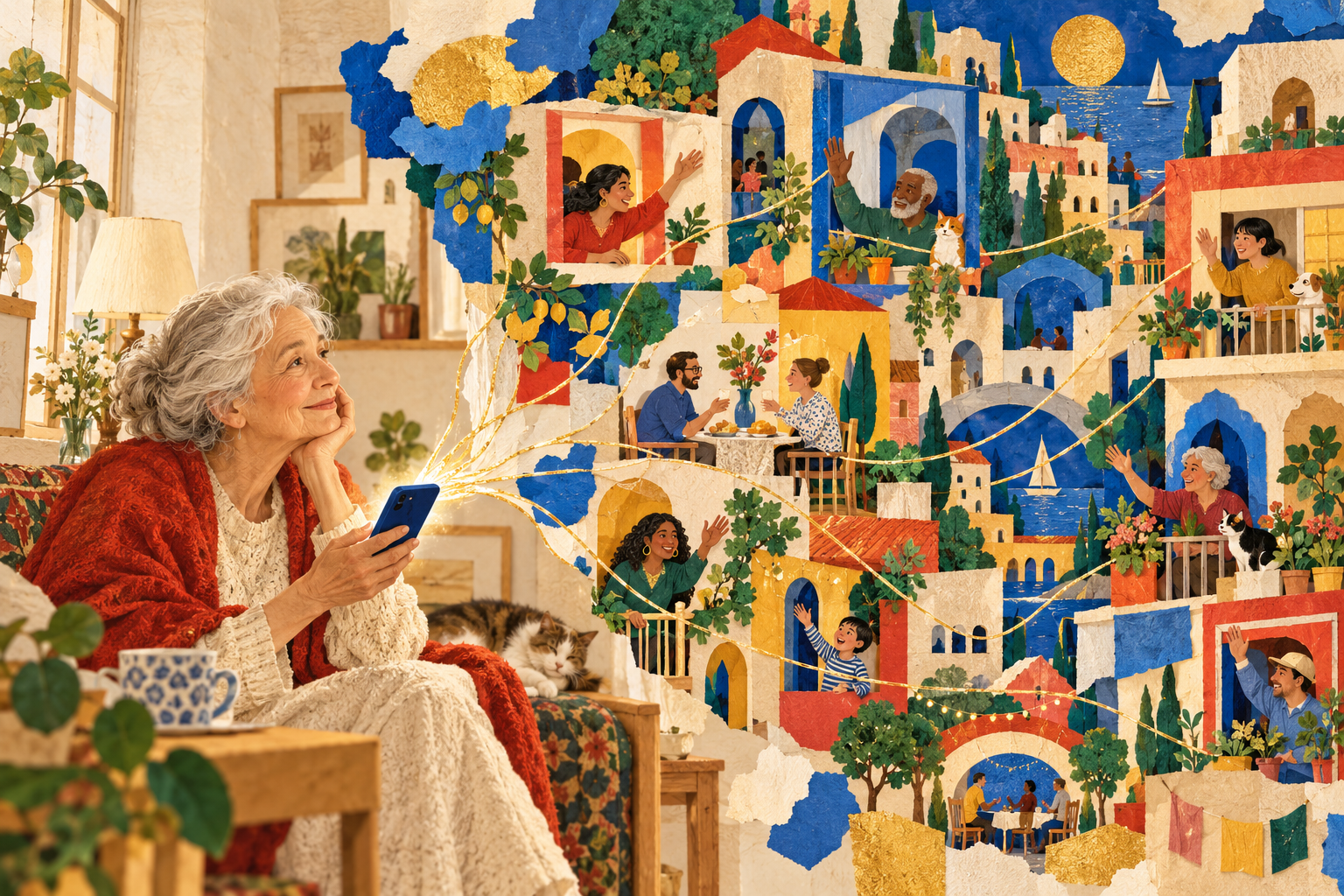
When we talk about social media, we often assume people go there for entertainment, information, or simply to pass the time. But I believe something deeper is happening in the background. Perhaps people were never looking for content in the first place. Perhaps they were looking for people.
We talk a great deal about the human need to be loved, but forget that we also need to love. We need someone to care about, whose news we can follow, whose joy makes us happy and whose sadness saddens us. We need to feel that there are people in this world who occupy a place in our hearts and our attention.
In the past, this need was met more naturally. Families were larger, neighbors were closer, and relatives were present in the details of daily life. A person woke knowing that their day would intersect with the lives of many others. They knew one another's news and felt part of a broad social fabric that moved with them and within them.
But the shape of life changed. Homes became quieter, families smaller, and relationships less present in everyday experience. Not necessarily because love disappeared, but because the rhythm itself changed. Each person became occupied with their own world, responsibilities, and problems. Amid this change, a new space opened within many people: a capacity for attention and participation that no longer found its natural outlet as it once had.
Then came social media.
For the first time, a person could enter the lives of dozens of people every day. See their faces repeatedly, hear their voices, know their stories, follow their successes and failures, and watch the small details of their days. Over time, this becomes more than watching. A kind of familiarity begins to form—not because these people have become true friends, but because they have become part of the daily landscape of life.
An older mother waits each evening for someone whose daily life she has grown used to watching. Someone feels happy when a creator achieves a new success, or worries when they disappear for a long time. From outside, it may look like mere following. Inside, real feelings are moving: real concern, real empathy, and a sense of participation.
Perhaps this is why social media's success was never based on the quality of content alone. Content by itself cannot explain the intense emotional attachment that forms between people and those they follow. What happens is deeper. These platforms did not offer people more videos; they offered them more human beings. People whose happiness they could share, with whom they could empathize, whose journeys they could follow and feel part of.
When I see my mother spend hours watching people's outings and everyday lives, I do not feel she is searching for a new video so much as enjoying a human companionship that modern life has come to lack. She does not follow places alone, or events alone, but the people themselves. She is happy for them, grows familiar with them, and feels she is sitting among them, even from behind a screen.
Perhaps here lies one of the most important human phenomena social media has revealed. It did not create new needs within us. It revealed old needs that had always been there: the need to participate, to care, and to feel that other people's lives touch our own in some way.
It may therefore be a mistake to see all this attachment as mere addiction to content. Often, content is not what draws people in at all. What draws them is that simple human feeling that there are people around them, sharing their days, giving them a rare opportunity to love, to care, and to belong once again to a world larger than the boundaries of their daily lives.